.png)
When Does a SUDS Pond Need Maintenance? Signs It’s Time for Desilting and Vegetation Clearance

Effective SUDS pond maintenance is what keeps an attenuation pond working properly as part of a wider drainage system. When silt builds up, flow paths become blocked or vegetation spreads too far, storage capacity can be reduced and routine upkeep can quickly turn into a larger remedial job.
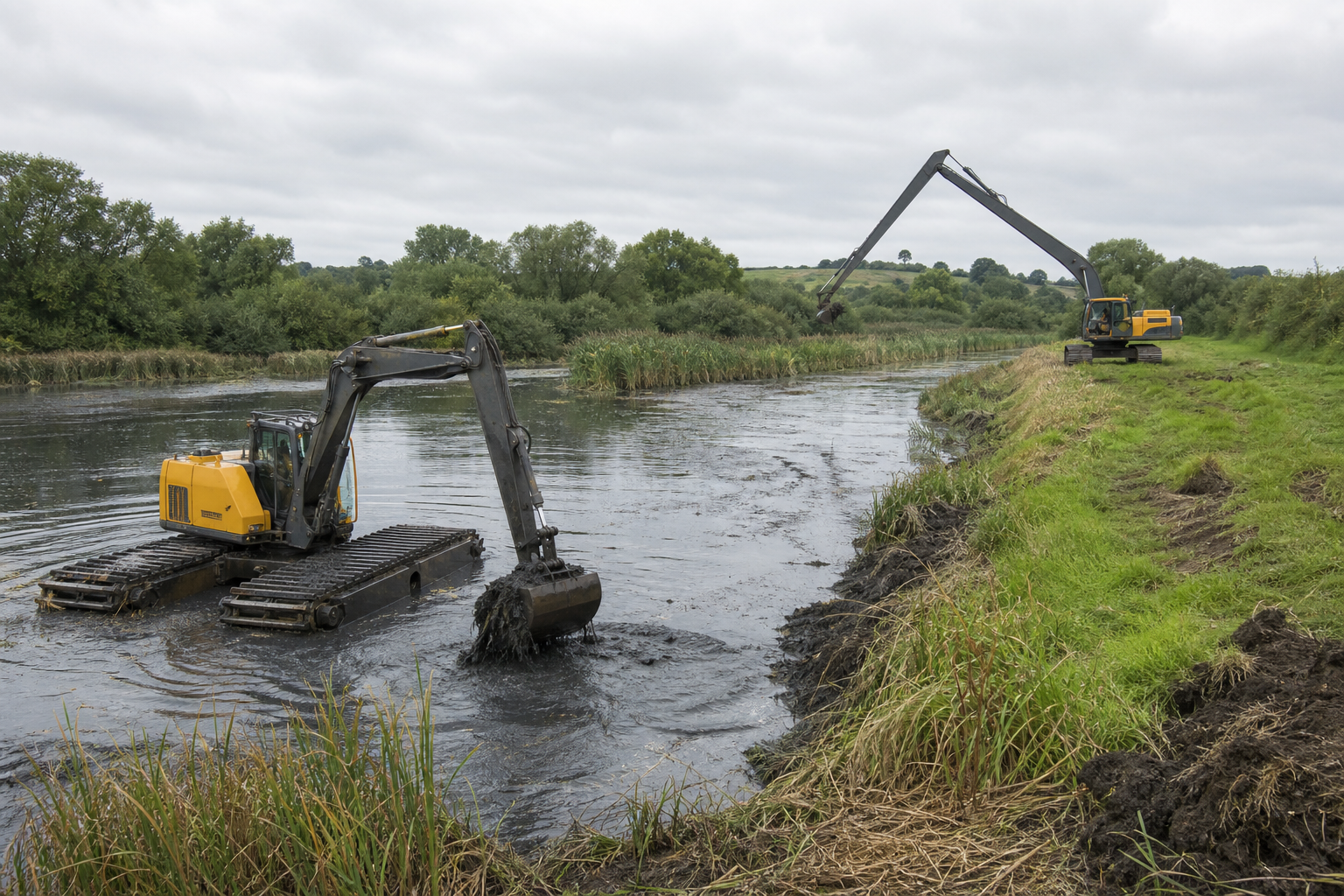
At Digger Boats Ltd, we help businesses, landowners, councils and site managers identify these issues early. Based in Braintree and working across Essex, London and the wider UK, we provide specialist aquatic and environmental services using advanced amphibious machinery and specialist digger boats.
If you are responsible for a pond, basin or drainage asset, knowing the warning signs can help you act before access worsens, performance drops or maintenance becomes more disruptive than it needs to be.
What a SUDS pond is designed to do
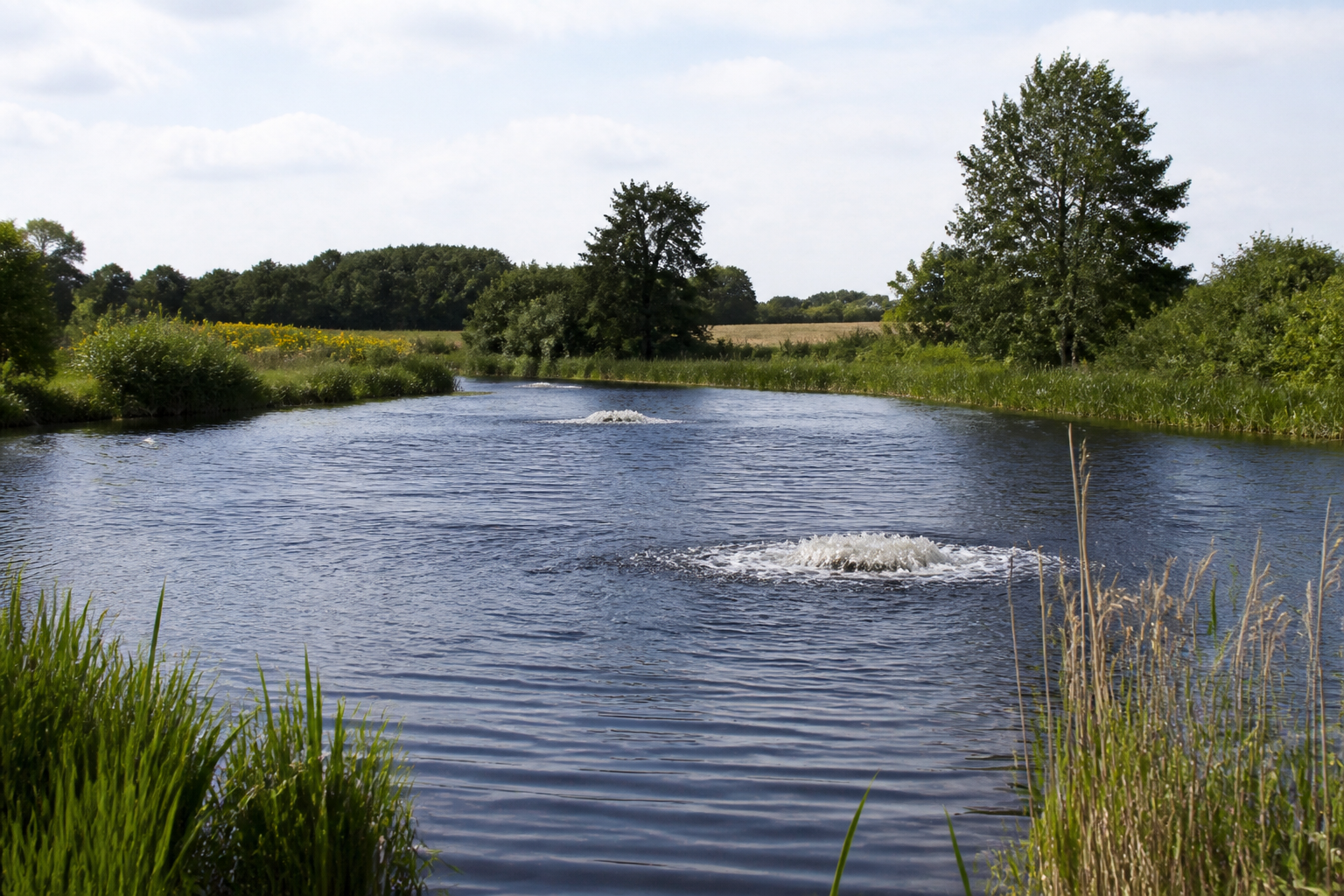
A SUDS pond is there to slow, hold and manage surface water runoff. In many cases it also helps trap sediment and supports a healthier, more stable water environment.
That means some gradual change is normal. Sediment settles over time, marginal vegetation develops, and inlet and outlet structures can collect debris. The issue is not whether a pond changes, but whether those changes are now affecting how the asset performs.
Regular inspection makes it easier to distinguish between a pond that is maturing naturally and one that is starting to need targeted maintenance.
SUDS pond maintenance: the key signs action is needed
If you are seeing one or more of the issues below, it is usually time to arrange a closer assessment.
Visible silt build-up around the bed, inlet or shallow margins
Blocked or restricted flow paths through the pond
Dense reeds, rushes or weed growth taking over usable water space
Persistent standing water in the wrong areas or poor drawdown after rainfall
Eroded banks or unstable edges that make access and upkeep harder
Debris, odours or discoloured water suggesting the pond is not being managed effectively
1. Silt is reducing storage capacity
One of the clearest reasons for maintenance is a noticeable build-up of silt. This often shows first near inlets, around shallow shelves or across areas that were once visibly deeper.
As sediment accumulates, the pond has less room to hold water. It can also create ideal conditions for excessive plant growth, which adds another layer of management pressure.
If the pond looks shallower than it should, or if the bed level has visibly risen, desilting may be needed rather than lighter maintenance alone.
2. Inlets, outlets or connecting channels are restricted
A pond does not work in isolation. If water cannot enter, move through or leave the system properly, overall drainage performance can be affected.
Warning signs include debris around pipe heads, sediment fans at inlets, slow flow through channels, or obvious blockages at outfalls and control structures. In some cases the pond itself is not the only issue; adjoining ditches, channels or drainage features may also need attention.
Our drainage maintenance and SUDS support is designed to look at the wider system, not just the visible water body.
3. Vegetation is starting to dominate the pond
Some vegetation is beneficial. The problem starts when reeds, rushes, lilies or other growth become so dense that they narrow flow paths, restrict inspection access or take over large areas of open water.
Overgrown vegetation can also trap more sediment, conceal problem areas and make it harder to see whether banks, inlets and outlets are still in good condition. That is why selective clearance is often an important part of planned maintenance.
Where growth is excessive, our reed clearance and vegetation management services can help restore access and balance without taking an indiscriminate approach.
4. Water is lingering where it should not
After heavy rainfall, a pond should behave in a predictable way for that site. If water is remaining in unexpected areas, draining away too slowly, or bypassing the intended route, something has usually changed within the pond or connected drainage network.
This may be linked to silt, vegetation, bank slumping or blocked structures. It is a strong sign that maintenance should not be delayed, particularly on commercial sites, housing developments or public-facing land where poor drainage can create wider management issues.
5. Banks and access points are deteriorating
Maintenance is not only about what is happening in the water. Damaged edges, unstable banks and poor access routes can make routine work harder and increase the scale of future intervention.
If machinery access is becoming more limited, if margins are collapsing, or if vegetation is making inspection unsafe or impractical, it is sensible to act sooner rather than later.
6. The pond looks neglected or is harder to inspect
Sometimes the simplest sign is visual. If the pond looks heavily choked, unclear, debris-strewn or obviously unmanaged, it is worth investigating.
For asset owners and site managers, difficulty inspecting the pond is a practical problem in itself. If you cannot clearly see water levels, flow routes or edge condition, you cannot make confident maintenance decisions.
When light maintenance is enough and when desilting is needed
Not every pond needs full desilting. In some cases, a programme of vegetation clearance, debris removal and flow-path reinstatement is enough to improve function and appearance.
Desilting becomes more likely when:
sediment depth is clearly reducing usable capacity
the pond bed level has materially risen
silt is repeatedly blocking inlets or channels
vegetation is thriving because the pond has become too shallow
previous light maintenance has not resolved the underlying issue
This is where a proper site assessment matters. Removing too little may leave the real problem in place, while removing too much can make the job larger and more costly than necessary.
Our dredging and desilting work is suited to water bodies and drainage assets where accumulated material is now affecting performance.
Why vegetation clearance should be selective
Vegetation management is often misunderstood. A healthy pond does not need every reed or plant stripped out. What it does need is the right balance between open water, stable margins, access and flow.
Selective clearance can help to:
reopen blocked channels and inlets
restore inspection visibility
improve access for future maintenance
reduce trapped silt and debris
keep the pond looking better managed
At Digger Boats Ltd, we take an environmentally responsible approach and match the method to the site, the level of overgrowth and the maintenance objective.
How we approach SUDS pond maintenance
Every site is different. Water depth, soft ground, restricted access and the surrounding environment all affect how maintenance should be carried out.
Since 2018, Digger Boats Ltd has delivered specialist aquatic and environmental services across the UK for businesses, landowners, councils and fisheries. We use advanced amphibious machinery and specialist digger boats to carry out work efficiently, safely and to a high standard.
Depending on the condition of the pond and access available, works may involve:
inspection of silt build-up and blocked flow paths
vegetation, reed or rush clearance
desilting and removal of accumulated material
restoration of access for ongoing maintenance
wider drainage maintenance linked to the pond system
This specialist approach is particularly valuable where conventional access is difficult or where the water body needs careful handling to avoid unnecessary disruption.
Who should act quickly when warning signs appear
The people most likely to search for SUDS pond maintenance are often the same people responsible for keeping drainage assets functional and manageable.
That commonly includes:
commercial site and estate managers
landowners
councils and public sector teams
property and facilities managers
operators of sites with ponds, basins or connected drainage channels
If you are already noticing reduced capacity, dense vegetation or recurring blockages, early action is usually the most practical option. It helps you understand the scale of the issue and plan the right level of work before conditions become more difficult.
Frequently asked questions about SUDS pond maintenance
How often should a SUDS pond be inspected?
Inspection frequency depends on the site, surrounding land use, vegetation growth and how much sediment the system receives. In practice, regular planned checks and extra inspections after significant weather events help identify problems before they become larger maintenance jobs.
What is the difference between SUDS pond maintenance and desilting?
SUDS pond maintenance is the wider term. It can include debris removal, vegetation clearance, access improvement and drainage upkeep. Desilting is a more specific operation that removes accumulated sediment when build-up is affecting capacity or flow.
Can overgrown reeds and rushes cause drainage problems?
Yes. Excessive growth can narrow flow routes, trap sediment, hide defects and make inspection much harder. Some vegetation is expected, but unchecked growth can contribute to reduced pond performance.
Who is responsible for maintaining a SUDS pond?
Responsibility depends on ownership and the way the drainage asset has been set up for the site. For many commercial, public and privately managed locations, the owner or appointed manager is responsible for arranging inspection and maintenance.
Can maintenance be carried out where access is difficult?
Often, yes. Specialist equipment can make a major difference on soft ground, shallow margins and water-based access locations. That is one of the reasons many clients bring in a specialist aquatic contractor rather than relying on standard land-based plant alone.
Book a site assessment for your SUDS pond
If your pond is showing signs of silt build-up, blocked flow paths or overgrown vegetation, now is the right time to investigate. A professional assessment can help you understand whether the site needs routine maintenance, targeted vegetation clearance or more extensive desilting.
Digger Boats Ltd provides specialist drainage, aquatic and waterway maintenance services from Braintree across Essex, London and the wider UK. To discuss your site, call 01376 435008, email info@diggerboats.com, or visit www.diggerboats.com to arrange a site assessment.
Acting early can make maintenance simpler, restore access and help keep your SUDS pond working as it should.