.png)
Lake and Pond Aeration: 6 Signs Your Waterbody May Need Aeration and Water Balancing
If your waterbody is looking still, smelling stale or struggling with recurring weed and algae, lake and pond aeration may be part of the answer. Just as importantly, it may show that the site needs better water balancing, not simply another round of surface clearance.
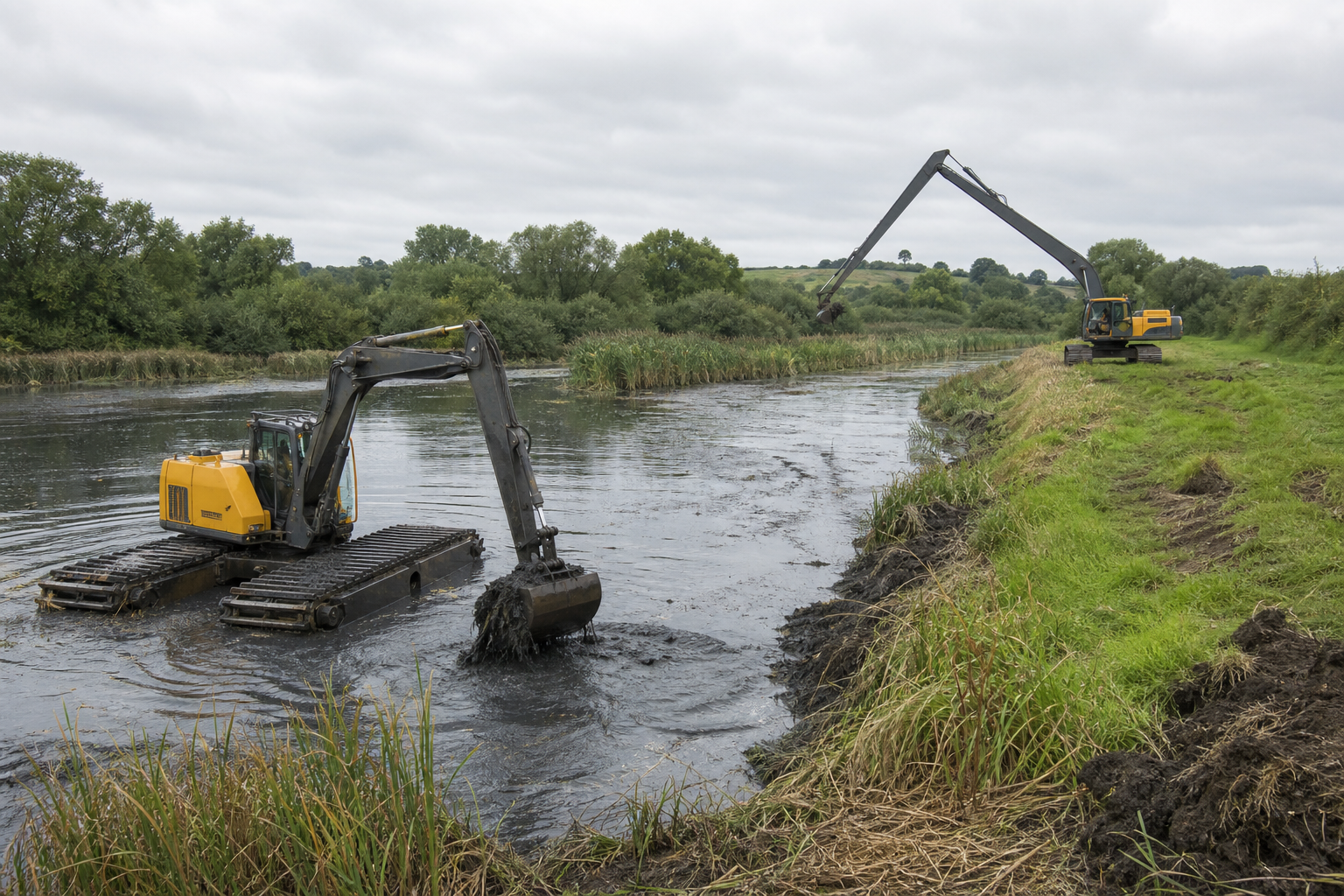
At Digger Boats Ltd, we help businesses, landowners, fisheries and councils assess lakes, ponds, waterways and drainage features across Essex, London and the wider UK. From our base in Braintree, we use advanced amphibious machinery and specialist digger boats to plan practical aquatic maintenance and restoration work around the condition of the site.
The key is knowing when poor water movement is the main issue, and when it is only one part of a larger problem. Below are six common signs that aeration and water balancing may be worth investigating.
What lake and pond aeration is designed to improve
In simple terms, aeration is used to improve water movement and oxygen transfer within a lake or pond. Where conditions have become too still or uneven, it can help support more stable water quality and a healthier overall environment.
Water balancing sits alongside that. It looks at how water moves through the site, where stagnant zones are forming, and whether the current layout, inflows, outflows, depth or accumulated material are causing the same weak points to appear again and again.
That matters because not every waterbody needs the same solution. Some respond well to improved circulation. Others need broader lake restoration services, vegetation clearance or sediment removal before better water movement will make a lasting difference.
6 signs your waterbody may need lake and pond aeration
1. Parts of the water stay noticeably still for long periods
A lake or pond does not need to look rough to be healthy, but persistent stillness in corners, margins or whole sections can be a warning sign. If the same areas always look flat, lifeless or cut off from the rest of the waterbody, circulation may be poor.
These dead spots often become the first places where debris gathers, surface films develop and summer water quality starts to dip. In many cases, this is where aeration or water balancing can make the biggest difference.
2. You are noticing stale odours, dark water or black organic build-up
Unpleasant smells are often a sign that organic matter is breaking down in poor conditions. You may notice dark staining around the margins, black sludge in shallow areas or a general musty smell when water levels drop or temperatures rise.
That does not automatically mean aeration is the only answer, but it can point to weak oxygen exchange and poor water movement. If the smell keeps returning, it is worth assessing whether the waterbody is holding too much decomposing material in stagnant areas.
3. Algae, scum or surface bloom problems keep coming back
Recurring algae is one of the most common reasons owners start asking about aeration. If green water, surface scum or seasonal blooms return quickly, it often suggests the waterbody is out of balance rather than facing a one-off issue.
Aeration can help improve conditions, but it is important to be realistic. Repeated algae problems may also be linked to silt, nutrient-rich organic build-up, shallow water, restricted flow or wider neglect. That is why a proper assessment matters before choosing the next step.
4. One end of the lake performs very differently from the other
Some waterbodies become uneven over time. One area may stay clearer and more usable, while another regularly turns stagnant, weedy or discoloured. In ponds, you may notice one bank becoming far more problematic than the rest.
This kind of imbalance often points to a circulation issue. Water balancing is especially relevant where inflows, outflows, shallow shelves or localised build-up are creating sections that no longer behave as part of a healthy whole.
5. Warm weather causes a clear drop in water quality or fishery performance
Many lakes and ponds cope reasonably well for much of the year, then struggle during warmer periods. Water may look duller, smell worse, or become harder to manage. Fisheries may notice that conditions become more difficult during summer, particularly in stagnant sections.
When problems become seasonal in this way, it often suggests the site is vulnerable to low movement and falling resilience during peak temperatures. Aeration may help support more stable conditions, especially when combined with the right wider maintenance plan.
6. Previous clearance work improved appearance, but not the underlying problem
If weed removal or vegetation clearance has only delivered a short-term improvement, the visible growth may have been a symptom rather than the root cause. Poor circulation, shallow areas, heavy organic build-up and recurring stagnation can all drive the same issues back.
This is where owners can waste money by repeating the same surface-level work. In some cases, the right answer is aeration. In others, it may involve water balancing plus dredging services, mechanical weed removal or broader restoration work.
When aeration is the right next step and when it is not
Lake and pond aeration is often worth considering when the main issue is poor water movement, stagnant zones or recurring signs of imbalance. It can be especially useful where the waterbody still has workable structure and depth, but is no longer circulating well enough to stay in better condition.
However, aeration is not a substitute for every other form of maintenance. If the site is heavily silted, badly overgrown, restricted by blocked flow paths or suffering from years of accumulated organic build-up, better circulation alone may not solve the whole problem.
Aeration may be suitable where still water, recurring odour and uneven circulation are the main concerns.
Water balancing may be needed as well where some areas perform reasonably well but others repeatedly stagnate.
Wider restoration may be the better route where silt, vegetation, access or structural issues are affecting how the whole waterbody functions.
That is why we always recommend looking at the site as a whole rather than assuming one product or one visit will fix everything.
Why a professional site assessment matters
No two lakes or ponds behave in exactly the same way. Depth, access, surrounding vegetation, purpose, organic loading and overall layout all affect whether aeration is likely to help, and whether it needs to sit within a wider maintenance plan.
At Digger Boats Ltd, we have been providing specialist aquatic and environmental services since 2018. Working from Braintree, CM7 5SL, we support clients across Essex, London and the UK with practical assessments and on-site solutions using specialist digger boats and amphibious machinery.
Our approach is straightforward. We look at what the waterbody needs to do, what is stopping it from performing properly, and whether the next step should be aeration, water balancing or broader lake and pond maintenance. That helps avoid partial fixes and supports more environmentally responsible decision-making.
For many owners, that clarity is the real value. It is far better to identify the right scope early than to keep paying for repeat work that never deals with the underlying condition of the site.
What to do if you are seeing these signs
Make a note of where the problem appears. Is it site-wide, or limited to certain corners, banks or shallow sections?
Watch for repeat patterns. If the same issues return each warm season or after rainfall, there is usually an underlying cause.
Look beyond surface appearance. Weed, odour and algae often point to a broader water management issue rather than an isolated nuisance.
Book a site assessment. A practical review can help you decide whether aeration, water balancing or wider restoration is the right next step.
If you want a clear view of what your lake or pond needs, book a site assessment with Digger Boats Ltd. You can also email info@diggerboats.com to discuss your site.
Frequently asked questions about lake and pond aeration
What does lake and pond aeration actually do?
Lake and pond aeration helps improve water movement and oxygen transfer. In the right conditions, that can support better circulation, reduce stagnation and help the waterbody perform more consistently.
Will aeration solve algae and weed problems on its own?
Not always. Aeration can help where poor circulation is part of the problem, but repeated algae and weed growth may also be linked to silt, shallow water, organic build-up or wider maintenance issues. That is why site assessment is important.
What is water balancing in a lake or pond?
Water balancing looks at how water moves through the site and whether certain areas are becoming cut off, overloaded or consistently stagnant. It is about improving the overall behaviour of the waterbody, not just treating one visible symptom.
How do I know whether I need aeration or wider restoration work?
If your waterbody also has heavy silt, severe overgrowth, blocked flow paths or long-term loss of depth, aeration may only be one part of the answer. A professional review can help determine whether you need targeted aeration, broader restoration, or a combination of both.
Do Digger Boats Ltd cover sites outside Essex?
Yes. We are based in Braintree and work across Essex, London and the wider UK, providing specialist aquatic and environmental services for lakes, ponds, waterways and drainage assets.
Conclusion
Still water, recurring algae, stale odours and uneven site performance are all signs that your waterbody may be struggling with circulation and balance. In some cases, lake and pond aeration is the right next step. In others, it needs to be combined with water balancing or wider restoration work to achieve a lasting result.
If you are starting to see these warning signs, do not wait for a manageable issue to become a larger project. Contact Digger Boats Ltd to arrange a site assessment and discuss the most practical next step for your lake or pond.