.png)
Lake Restoration Services: What Landowners, Fisheries and Councils Should Expect From a Restoration Project

If you are researching lake restoration services, you are usually trying to solve more than one problem at once. Silt may be reducing depth, weed growth may be limiting use, reeds may be spreading, or water movement may have become poor. For landowners, fisheries and councils, the real question is not simply what needs clearing, but what kind of restoration project will bring the lake back into a more manageable condition.
At Digger Boats Ltd, we provide specialist aquatic and environmental services from Braintree, working across Essex, London and the wider UK. Using advanced amphibious machinery and specialist digger boats, we help clients assess complex sites and plan practical lake refurbishment works based on the condition, access and purpose of the water body.
What lake restoration services usually involve
When clients approach us for lake restoration services, the scope often includes several connected tasks rather than one isolated job. A successful project starts with understanding what is affecting the lake now and what the lake needs to do in future.
Desilting and dredging to address built-up sediment and loss of capacity.
Mechanical weed removal where dense aquatic growth is restricting use or access.
Reed, rush and lily clearance where margins or surface areas are becoming overgrown.
Lake and pond aeration as part of a broader water management approach where appropriate.
Water balancing to support better water movement and site performance.
Tree works and vegetation management where surrounding growth is affecting the water body.
Ongoing maintenance planning so the site does not slip back into the same condition.
Not every lake needs every service. The right combination depends on whether the priority is amenity, fishery use, drainage performance, appearance, access or long-term maintenance.
What landowners, fisheries and councils should expect at the assessment stage
Clear objectives before machinery arrives
The best restoration projects begin with a clear brief. A private landowner may want to restore appearance, access and capacity. A fishery may be more focused on depth, manageable weed levels and usable open water. A council may need a practical plan for a public or managed asset that is becoming difficult to maintain.
At assessment stage, the key questions usually include:
How much silt has built up and where is it concentrated?
Is vegetation reducing the usable water area?
Are reeds, rushes or lilies dominating the margins or surface?
Is poor access making routine maintenance harder than it should be?
Would the site benefit from a combination of desilting, clearance and water management rather than a single intervention?
A realistic method built around site conditions
Lake restoration is rarely a simple dry-land excavation job. Soft banks, wet margins, limited access and the need to work in or near water all affect how a project should be delivered. That is why the working method matters as much as the scope.
Clients should expect a contractor to look closely at access, reach, stability, water depth, vegetation density and the order in which works need to be completed. In many cases, that is what determines whether the project is efficient and controlled or unnecessarily disruptive.
Lake restoration services that may form part of the project
Desilting and dredging
Silt accumulation is one of the most common reasons a lake starts to underperform. Over time, sediment can reduce depth, shrink usable water space and make vegetation problems worse. Where that build-up is significant, dredging services or targeted desilting may form a major part of the restoration plan.
The aim is not simply to move material around. It is to remove problematic build-up in the right areas, restore more workable levels and support the overall function of the water body. On some sites, this may focus on shallow margins and inlets. On others, it may be part of a wider lake refurbishment project.
Mechanical weed removal and margin clearance
Excessive weed growth can quickly change how a lake looks and works. It can narrow channels, limit access, make maintenance more difficult and reduce the amount of open water available. In these cases, mechanical weed removal is often more practical than leaving the problem to spread.
Reed clearance, rush clearance and lily clearance may also be needed where margins are becoming overgrown or where vegetation is taking over key areas of the site. The right approach depends on density, location and the overall restoration objective. A good project does not just clear growth for the sake of it; it targets the areas that are affecting performance and usability.
Aeration and water balancing
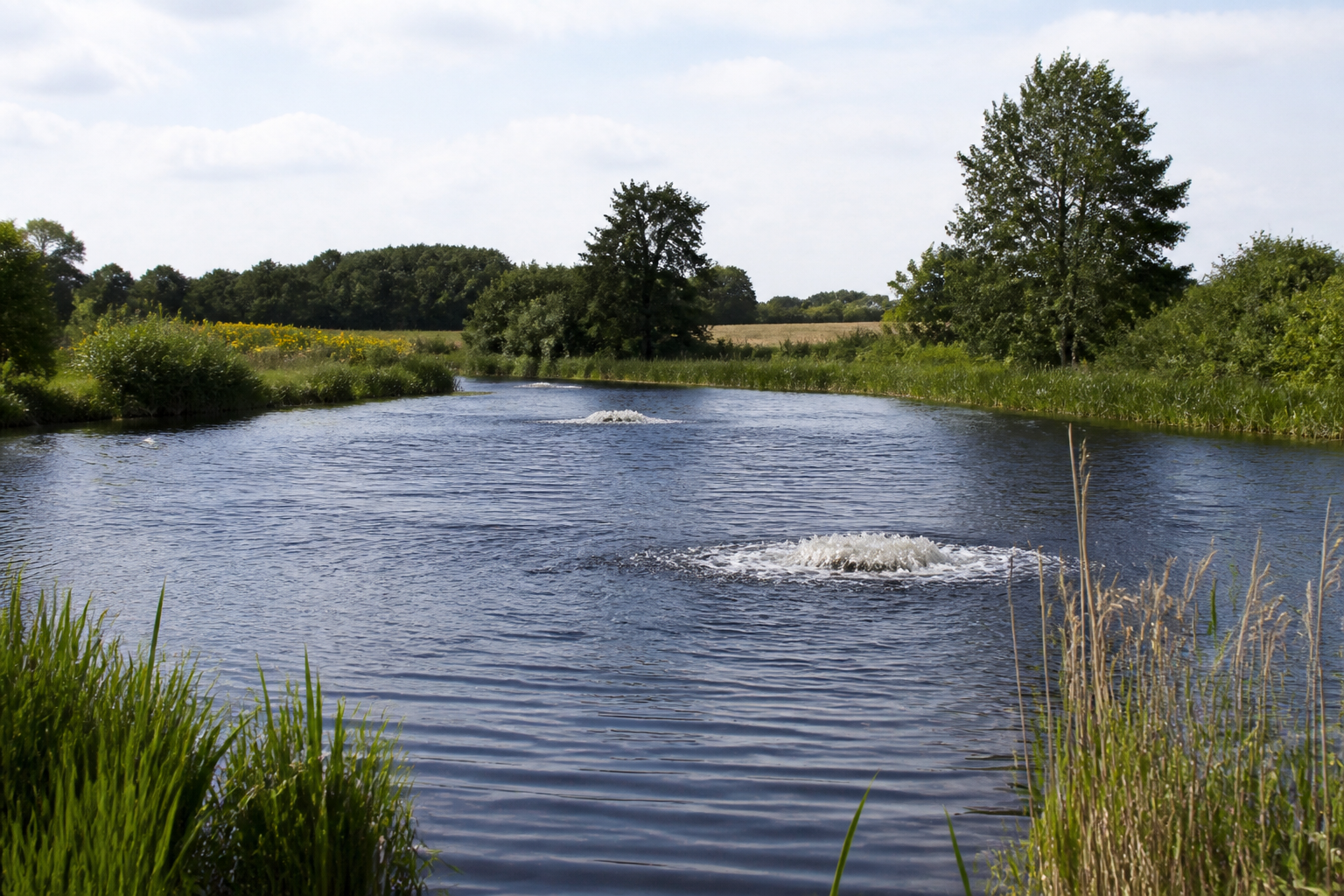
Some restoration schemes need more than physical clearance. Where stagnant conditions, low water movement or wider water management concerns are part of the issue, lake and pond aeration or water balancing may be considered as part of the overall plan.
These measures are usually most effective when they support, rather than replace, core restoration works. If a lake is heavily silted or densely overgrown, aeration alone is unlikely to resolve the underlying problem. This is why a full site assessment is so important before any method is recommended.
Why specialist equipment matters on a lake restoration project
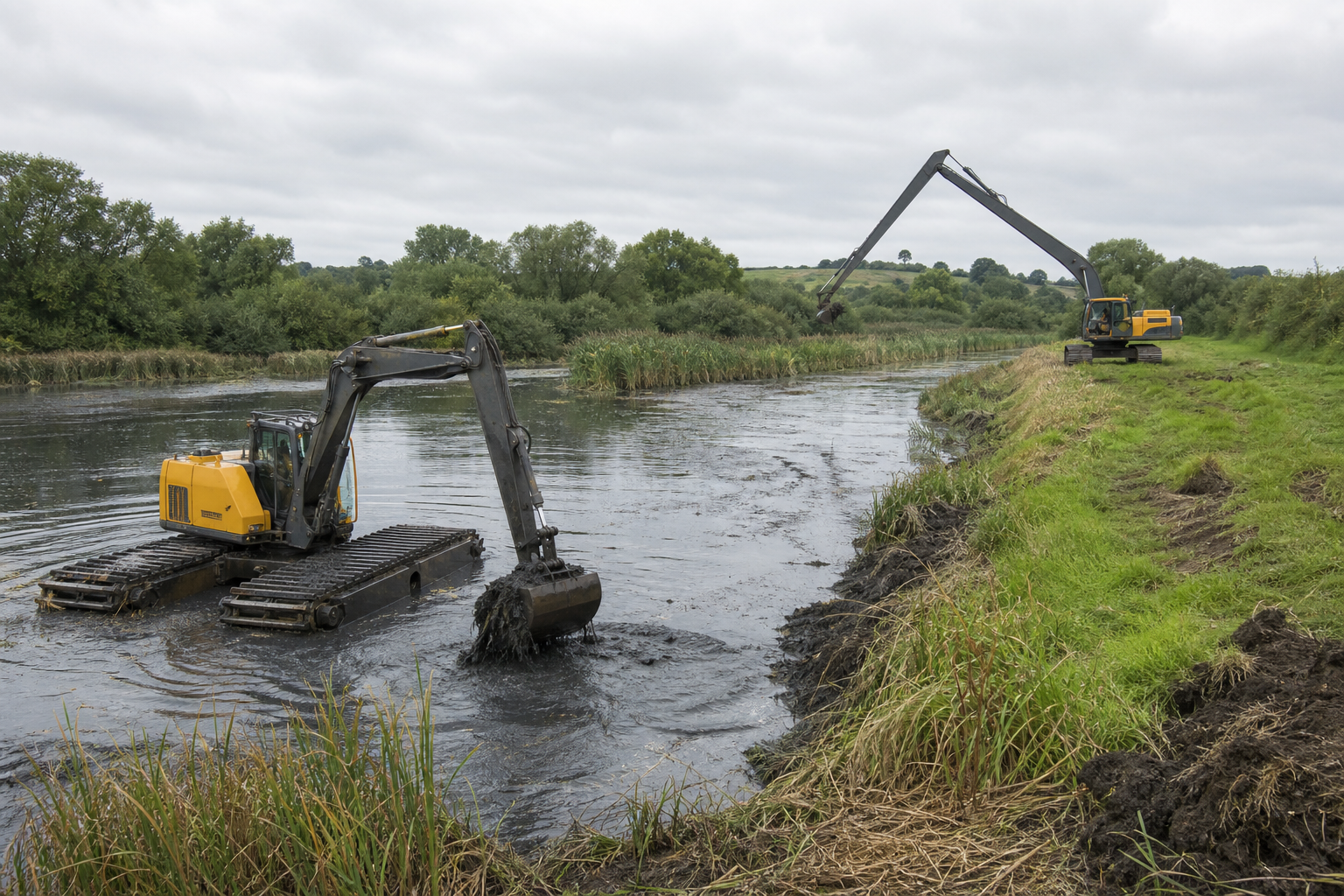
One of the biggest differences between a straightforward maintenance task and a genuine restoration project is the equipment required. Sites with soft ground, shallow water, unstable margins or difficult reach often need machinery designed specifically for aquatic work.
At Digger Boats Ltd, we use advanced amphibious machinery and specialist digger boats, alongside equipment such as weed boats, floating maintenance platforms, silt barges and long reach diggers where appropriate to the job. That means we can plan around site constraints rather than forcing a site to fit standard plant.
Better access to wet or difficult ground without relying on unsuitable methods.
Targeted work in shallow or hard-to-reach areas where vegetation and silt often build up first.
A more joined-up project approach when desilting, clearance and water management need to be coordinated.
Support for both one-off refurbishment and planned upkeep depending on how the site is used.
How a typical restoration project is planned and delivered
Although every site is different, most lake restoration projects follow a similar path. This is what clients should generally expect.
Initial discussion and site assessment. We review the visible issues, likely priorities, access challenges and the overall purpose of the lake.
Defining the scope. This is where the project becomes clearer. Does the site mainly need desilting, vegetation clearance, aeration, water balancing or a combination of services?
Choosing the right equipment and sequence. The order of works can make a big difference, especially where silt, reeds and access problems overlap.
Planning around practical constraints. Programme timing, site use, water conditions, working space and any relevant permissions all need to be considered before work begins.
Carrying out the restoration works. The focus should be on doing the right work in the right areas, with methods suited to aquatic conditions.
Reviewing future maintenance needs. Many sites benefit from a follow-up plan so that restored areas remain manageable over time.
This final stage is often overlooked. In reality, restoration works are most valuable when they are paired with sensible ongoing lake and pond maintenance rather than left until conditions deteriorate again.
How to judge whether a contractor is right for your site
If you are comparing providers, look beyond whether they can carry out one individual task. Many lakes need a combination of services and a contractor that understands how those elements fit together.
Aquatic experience with lakes, ponds, waterways and drainage-related environments.
Specialist machinery suited to wet ground, shallow water and difficult access.
Broad service capability covering desilting, weed removal, vegetation management and wider restoration support.
Clear communication about what is needed now, what can wait and what should form part of a longer-term plan.
An environmentally responsible approach that recognises the practical sensitivity of water-based work.
Digger Boats Ltd was established in 2018 and provides specialist aquatic and environmental services across the UK. From our Braintree base, we work with landowners, fisheries, councils, businesses and site managers who need practical solutions for restoration, maintenance and difficult-access aquatic works. Our focus is on professional service, the right equipment and a scope that suits the condition of the site.
FAQ: lake restoration services
What do lake restoration services include?
Lake restoration services can include desilting, dredging, mechanical weed removal, reed clearance, rush clearance, lily clearance, aeration, water balancing and wider vegetation management. The exact scope depends on the condition and purpose of the lake.
How do I know if my lake needs dredging or weed removal?
If depth has been lost, shallow areas are expanding or sediment is visibly building up, dredging or desilting may be needed. If open water is being lost to dense growth, mechanical weed removal or vegetation clearance may be more appropriate. Many sites need both.
Can lake restoration be carried out where access is poor?
Yes, but the method and machinery are critical. Sites with soft banks, wet margins or limited reach often need amphibious or specialist aquatic equipment rather than standard excavation plant.
Do fisheries and councils need different restoration plans?
Often, yes. Fisheries may focus on usable water, depth and weed control, while councils may prioritise safe management, appearance, access and ongoing maintenance of a public asset. The best plan reflects how the water body is used.
How often should a restored lake be maintained?
There is no single timetable that suits every site. The need for maintenance depends on silt input, vegetation growth, water behaviour, surrounding land use and how intensively the lake is used. A site assessment is the best way to decide what ongoing upkeep makes sense.
Plan your restoration project with confidence
Lake restoration is most effective when it is based on the real condition of the site, not guesswork. Whether you are managing a private lake, a fishery or a council-owned water body, the right project should give you a clear scope, suitable methods and a realistic plan for future upkeep.
If you are considering a lake or pond restoration project, request a site assessment with Digger Boats Ltd or email info@diggerboats.com. We are based in Braintree and work across Essex, London and the wider UK.