When Are Digger Boat Services the Right Choice for Lake Desilting, Weed Removal and Restricted Access Sites?

Choosing the right machinery can decide whether a water-based project is straightforward or unnecessarily disruptive. If you are researching digger boat services for a lake, pond or watercourse, you are usually dealing with one of three practical issues: access is restricted, the banks are too soft for conventional plant, or the work needs to be carried out from the water itself.
At Digger Boats Ltd, we assess aquatic sites based on access, condition and the outcome required. From our base in Braintree, CM7 5SL, we work across Essex, London and the wider UK using specialist digger boats and advanced amphibious machinery to support desilting, weed removal, drainage maintenance and wider restoration works.
So when is a digger boat the right choice? In short, it is often the most practical option where bank-based excavation would struggle to reach the problem properly, where soft or unstable ground limits plant access, or where the work sits across open water rather than only at the edge.
What digger boat services actually involve
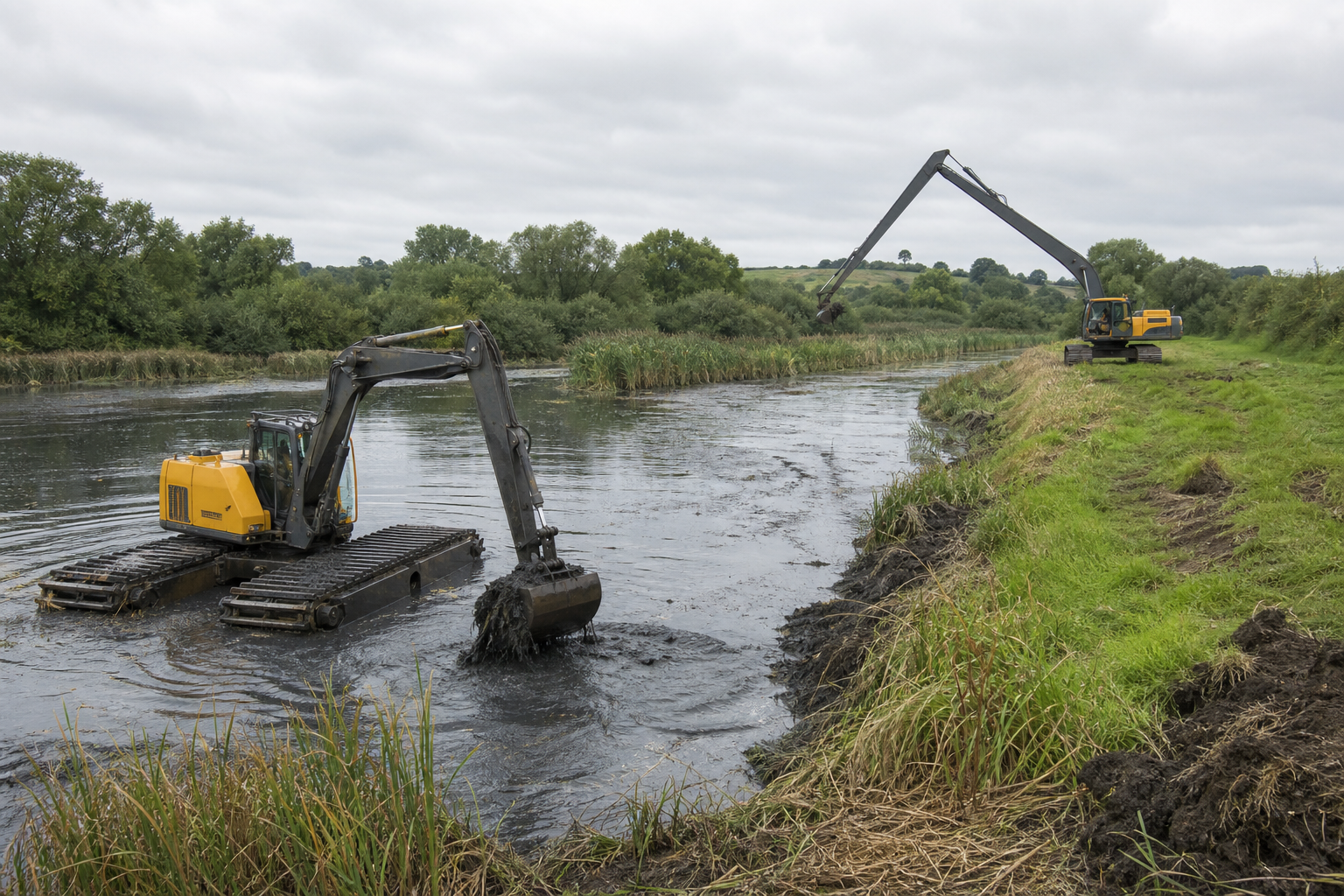
Digger boat services are used for aquatic maintenance and restoration where working directly from the water offers a better route to the problem. Rather than forcing the whole job from the bank, a digger boat setup allows targeted excavation and clearance in places that are otherwise awkward, inefficient or overly disruptive to reach.
Depending on the site, that may include:
Removing accumulated silt from lakes, ponds and channels
Clearing dense aquatic weed, lilies, reeds or rushes
Improving access to open water
Supporting drainage and watercourse maintenance
Helping with wider lake restoration services where access is a major constraint
The key point is that the machine choice should follow the site conditions, not the other way around. A digger boat is not there to sound specialist. It is there because the layout of the waterbody makes it a sensible working solution.
When Digger Boat Services Are the Right Choice
1. The bank is too restricted for efficient land-based working
Many lakes and ponds do not have a clean, wide working edge. Mature trees, soft verges, narrow tracks, fencing, landscaped margins or neighbouring boundaries can all make conventional access difficult.
In that situation, trying to complete everything from the bank can mean poor reach, repeated repositioning and more disturbance around the perimeter than the site really needs. A digger boat can often bypass those edge limitations and reach the work more directly from the water.
2. Ground conditions are soft, wet or unstable
Some sites look accessible until machinery gets close. Saturated margins, silted shallows and marshy approaches can quickly become the deciding factor. If the edge will not comfortably support the right plant, the project needs a different access strategy.
This is where specialist aquatic equipment becomes important. Digger boat services are often considered where the real constraint is not the size of the lake, but the condition of the approach and the need to work safely and practically around water.
3. The main problem sits out in open water, not just at the margin
If the issue is limited to a small section of bank, a simpler approach may be enough. But where silt, weed growth or obstructions spread well away from the edge, relying on reach alone can be limiting.
A digger boat is often the better fit when the work area extends across open water, around islands, into awkward corners or along lengths of channel that are hard to address effectively from one fixed land position.
4. You need desilting without turning the whole bank into a work zone
Dredging services are not only about removing sediment. They are also about how that material is accessed, lifted and handled. On some sites, the least practical part of the job is not the silt itself. It is creating enough stable bank access to remove it from the right locations.
Digger boat services can be a strong choice where targeted desilting is needed in awkward areas and a water-based working position helps reduce unnecessary movement around the perimeter.
5. Weed removal needs to happen in places bank machinery cannot reach properly
Heavy vegetation rarely spreads in a neat, accessible line. It can gather in shallow bays, around structures, across soft-edged margins or in central sections of a pond or lake where land-based equipment struggles to work accurately.
Where the growth is affecting use, appearance or maintenance, a digger boat can support more precise mechanical weed removal in the areas that need attention most. That can be especially relevant for lilies, reeds, rushes and mixed aquatic growth where access is part of the problem.
6. The site needs a wider restoration plan, not just a one-off clearance visit
Sometimes clients ask about digger boat services because the access is difficult, but the site is also dealing with several linked issues at once. Silt has reduced depth, weeds are spreading faster, margins are closing in and water movement is no longer as it should be.
In those cases, the right answer is often a broader restoration scope. A digger boat may play an important role within that, especially where the work needs to be phased across different parts of the waterbody rather than tackled from one bank position.
What kinds of sites commonly suit digger boat services?
We are usually asked to review digger boat requirements on sites such as:
Estate lakes and ornamental lakes
Fishing lakes and managed fisheries
Ponds with soft or overgrown margins
Drainage lagoons and attenuation features
Managed watercourses with awkward access points
Commercial and council sites where surrounding infrastructure limits plant movement
Not every waterbody needs this type of setup. Where there is firm, open access and the problem area sits comfortably within reach of the bank, another method may be more appropriate. The value of a digger boat comes from solving an access and working-position problem that would otherwise slow the project down or make it more disruptive.
Do you need a digger boat, an amphibious digger or a long reach setup?
This is a common question, and the answer depends on where the machine needs to work from.
Digger boat services are often best where the work is within or across open water and a floating working position makes access more practical.
Amphibious diggers are often suited to soft, saturated or transitional ground where the machine needs to travel over wet margins and shallow conditions.
Long reach diggers can be effective where there is a stable bank position and enough reach to complete the work cleanly from land.
The choice should come from the site layout, the condition of the margins, the spread of the problem and how removed material will be managed. That is why we look at the whole job, not just the headline request for a machine type.
How we assess whether digger boat services are the right option
At Digger Boats Ltd, our approach is practical. Before recommending a digger boat, we look at the points that actually determine whether it will add value:
Access to the site – how plant, personnel and removed material will get in and out.
Condition of the banks and margins – whether the ground can support land-based equipment or whether that creates avoidable risk and disruption.
Spread of the work area – whether the problem sits locally at one edge or across the waterbody.
Type of material to be removed – silt, weed, lilies, reeds, debris or a combination.
End result required – whether the aim is improved access, restored depth, better drainage, vegetation control or wider refurbishment.
This helps us recommend the most suitable setup for the site rather than defaulting to a generic solution. Since 2018, we have supported landowners, businesses, councils and fisheries with specialist aquatic works planned around condition, access and the result required.
Why a specialist review saves time later
On water-based projects, the wrong machinery choice can affect more than the programme. It can influence cost, disruption, loading arrangements, reinstatement needs and how completely the underlying problem is solved.
For example, a lake that looks like a straightforward weed clearance job may also need desilting in key areas. A pond that appears to need dredging may first have an access issue that dictates the entire method. A channel that seems reachable from the bank may in practice be blocked by soft edges, scrub or limited working room.
That is why we often recommend a practical site review before works are scoped. It gives a clearer answer on whether digger boat services are genuinely the right fit, whether they should be combined with other specialist plant, or whether a different setup would be more efficient.
How digger boat services can support wider maintenance and restoration
A digger boat is rarely an isolated answer. On many sites, it forms part of a broader package of aquatic and environmental works. Depending on the condition of the waterbody, that may include:
drainage maintenance services for ditches, channels and managed watercourses
Lake and pond desilting where settled material has reduced capacity or depth
Vegetation clearance where reeds, rushes, lilies or weed are restricting open water
Support for water balancing or broader refurbishment planning
Follow-up maintenance to help stop access and capacity problems returning too quickly
The benefit of taking this wider view is that it addresses the cause of the problem as well as the visible symptoms. That tends to produce a more practical and longer-lasting result than treating one issue in isolation.
Why choose Digger Boats Ltd for a site review?
We are a specialist aquatic and environmental business based in Braintree, CM7 5SL, working across Essex, London and the wider UK. We use specialist digger boats and advanced amphibious machinery to support lake restoration, dredging, weed removal, drainage maintenance and related water management works.
Clients contact us when they need a clear view of what is realistic on a difficult site. Our role is to assess the access, understand the condition of the waterbody and recommend a practical route forward. That means no guesswork about whether the work can be completed properly from the bank when the site conditions are pointing to a different approach.
We also work with a strong focus on professional service, environmentally responsible practices and high standards across aquatic maintenance and restoration projects.
Request a practical review of your site
If you are weighing up digger boat services for lake desilting, weed removal or a restricted access site, the best starting point is a practical review of the waterbody and access conditions.
Contact Digger Boats Ltd to discuss the site, the access available and the most suitable machinery for the work required. We can help you decide whether a digger boat is the right choice, whether the project needs a broader restoration scope, and how to plan the works more efficiently from the outset.
Frequently asked questions
What are digger boat services used for on lakes and ponds?
Digger boat services are commonly used for desilting, sediment removal, weed clearance, reed and lily management, drainage maintenance and other aquatic works where access from the bank is limited or the work sits out in the water.
Are digger boat services suitable for weed removal?
Yes, they can be very suitable where aquatic weed, lilies, reeds or mixed vegetation are spread across areas that are awkward to reach from land. The key is whether a water-based working position gives better access to the affected area.
Can a digger boat help on a restricted access site?
Often, yes. Restricted access is one of the main reasons clients enquire about digger boat services. If the bank is narrow, soft, overgrown or otherwise difficult for conventional plant, a digger boat may provide a more practical working method.
Does every desilting job need a digger boat?
No. Some desilting projects can be completed effectively from firm ground using other specialist plant. A digger boat tends to be most useful where the waterbody layout, bank condition or spread of the problem makes land-based access inefficient or impractical.
How do I know which machine is right for my site?
The right answer comes from reviewing access, ground conditions, the type of material to be removed and the result you need to achieve. If you are unsure, we can assess the site and recommend the most suitable setup for the work.
Conclusion
When access is awkward, the margins are soft or the real work sits out in the water, digger boat services can be the right choice for completing desilting, weed removal and restoration works more practically.
The important step is matching the machinery to the site. If you want a clear, professional view of what your lake, pond or watercourse needs, contact Digger Boats Ltd for a practical review and a sensible recommendation on the best route forward.