.png)
When Do You Need Lake Dredging Services? 7 Signs It’s Time for Desilting and Restoration

If you are wondering whether you need lake dredging services, the warning signs are often visible well before a lake becomes a major restoration project. Loss of depth, heavy silt build-up, spreading vegetation and poor water movement can all point to a lake that needs more than routine maintenance.
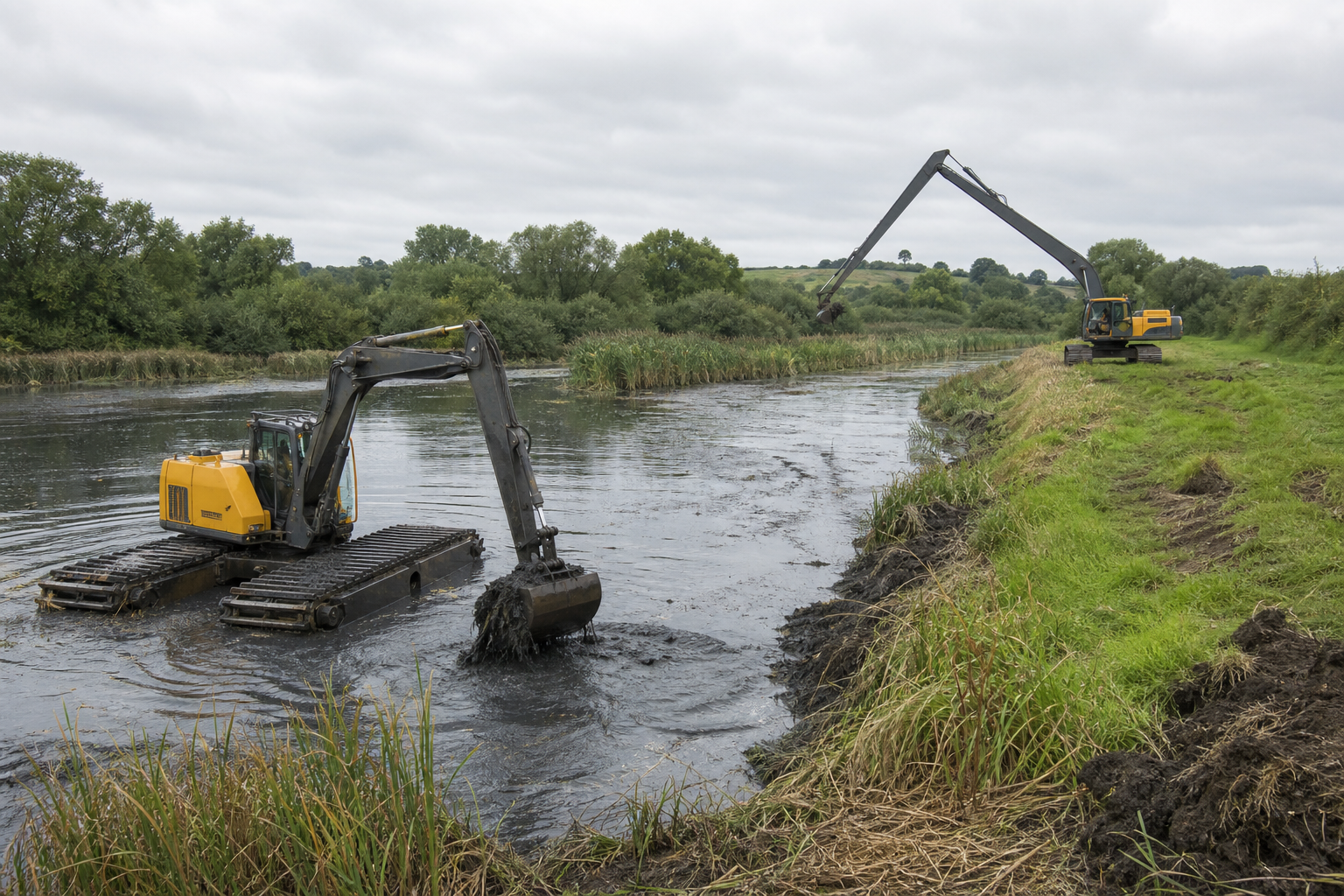
At Digger Boats Ltd, we help businesses, landowners, councils and fisheries assess lakes that are no longer performing or presenting as they should. Based in Braintree and working across Essex, London and the wider UK, we provide specialist lake restoration services using advanced amphibious machinery and specialist digger boats.
What dredging means in a lake setting
Lake dredging is the controlled removal of accumulated silt and sediment from the bed of a lake. In many cases, it forms part of a wider desilting and refurbishment plan that may also include vegetation clearance, mechanical weed removal, reed clearance or water balancing.
Some sediment build-up is normal over time. The real issue is whether that material is now affecting water depth, storage, access, appearance or the practical use of the lake. When it is, early intervention is usually far more manageable than leaving the problem to grow.
7 signs you need lake dredging services
1. The lake is noticeably shallower than it used to be
One of the clearest warning signs is a gradual but obvious loss of depth. Areas that once held open water may now feel soft underfoot, become wadeable much sooner or appear closer to the surface than before.
This matters because reduced depth changes how the whole lake behaves. It can limit usable water space, make maintenance harder and increase the likelihood of vegetation taking hold across previously deeper sections.
Margins extend further out than they once did
Formerly deeper areas now look flat or silty
Equipment, boats or inspections are restricted by shallow water
2. You can see silt building up around inlets, edges or shallow zones
Visible silt deposits are often the point where a lake starts telling you it needs help. Sediment commonly settles first around inflow points, sheltered corners and margins, creating muddy shelves and uneven profiles.
If those deposits are now widespread, the lake may be losing capacity and becoming harder to manage properly. This is often where targeted desilting makes a real difference, especially before the build-up spreads across the wider bed.
3. Weed, lilies, reeds or rushes are taking over open water
Heavy plant growth is not always a dredging issue on its own, but it is a frequent symptom of a lake that has become too shallow and silt-rich. As depth reduces, vegetation can establish more aggressively and start shrinking the amount of open water available.
In some cases, mechanical weed removal or reed clearance may deal with the immediate overgrowth. However, if the same areas keep filling back in, the underlying cause is often sediment build-up rather than vegetation alone.
Open water is being squeezed by expanding marginal growth
Lilies or weed are spreading further each season
Short-term cutting is no longer lasting
4. Water movement, flow paths or outfalls are becoming restricted
A lake does not have to be part of a formal drainage system to suffer from poor water movement. When silt builds up near inflows, channels or outlet areas, water can start moving less effectively through the site.
That can affect how the lake looks, how manageable it is and how well connected features perform. For sites with linked ponds or wider surface water responsibilities, it can also overlap with broader drainage maintenance and SUDS work.
5. The lake is no longer working for its intended purpose
Different lakes serve different roles. Some are part of an estate setting, some support fisheries, some are amenity features and some form part of a managed landholding. Whatever the purpose, a lake that is too shallow, overgrown or difficult to access stops delivering what it should.
You may notice that inspections are harder, maintenance costs are rising or the lake simply looks tired and neglected. When that happens, dredging and refurbishment often become the practical next step rather than repeated patch repairs.
6. The margins and surrounding vegetation are becoming difficult to control
Silt build-up rarely stays neatly in the middle of the lake. Over time, it contributes to shallower edges where reeds, rushes, scrub and other vegetation can spread more easily. That can make banks feel tighter, reduce visibility and make access for routine works far more awkward.
For many sites, this is the point where lake maintenance turns into lake restoration. Dredging can help recover depth along with the clear edge definition needed for better long-term management.
7. You keep paying for maintenance, but the same problems keep returning
If you are repeatedly clearing weed, tackling overgrowth or dealing with the same silty sections year after year, there is a good chance the lake has moved beyond basic upkeep. Routine maintenance is important, but it cannot solve a bed profile that has fundamentally changed.
That is often when a more structured desilting or lake refurbishment plan becomes the better investment. Instead of treating the symptoms again and again, you address the accumulated material that is driving the problem.
Why acting early usually saves time and disruption
The longer silt build-up is left, the fewer options you usually have. Earlier assessment does not always mean immediate dredging, but it gives you a much clearer view of scope, access and the most sensible next step.
Better access planning: it is easier to work on a lake before margins become heavily overgrown or unstable.
More targeted restoration: early action can allow a more focused approach instead of a larger corrective job later.
Less repeat spend: resolving the root issue can reduce the need for repeated short-term maintenance.
Improved presentation and usability: restoring depth and profile helps the lake function and look more like it should.
How we assess a lake before desilting and restoration
No two lakes are exactly the same. The right solution depends on how the lake is used, how much sediment has built up, what access is available and whether vegetation management also needs to be addressed.
At Digger Boats Ltd, a typical assessment focuses on the following:
Understanding the lake’s role We look at whether the lake is an amenity feature, a fishery, part of a wider managed site or a water body with ongoing maintenance issues.
Reviewing the visible signs of silting and overgrowth That includes shallow sections, edge conditions, inflow areas and the spread of reeds, rushes, lilies or other aquatic growth.
Considering access and working conditions Soft banks, wet ground and restricted entry points often call for specialist methods rather than conventional plant access.
Matching the site to the right equipment We use specialist digger boats, amphibious diggers, floating maintenance platforms, silt barges, weed boats and long reach diggers depending on the site requirements.
Recommending a practical restoration approach The outcome may involve dredging alone or a wider package of lake refurbishment, desilting and vegetation management.
Why landowners and site managers work with Digger Boats Ltd
We are a specialist aquatic and environmental services business established in 2018, based in Braintree, CM7 5SL and working across Essex, London and the wider UK. Our work supports businesses, landowners, councils and fisheries with practical solutions for lakes, ponds, waterways and drainage assets.
Clients come to us when standard access is difficult or when a site needs machinery designed for wet, soft or awkward environments. Our focus is on professional service, many years of experience, high standards and environmentally responsible working methods.
If your site may need desilting as part of a wider programme, we can also advise on related services including lake refurbishment, weed clearance, reed clearance and ongoing aquatic maintenance through our dredging services.
Request a site assessment for dredging, desilting and lake restoration
If your lake is visibly silting up, losing depth or becoming harder to manage, now is the right time to get a specialist opinion. A site assessment can help you understand whether you need dredging now, whether phased works are more appropriate or whether another form of restoration should come first.
To discuss your options with Digger Boats Ltd, call 01376 748159, email info@diggerboats.com or visit our lake dredging and restoration services to request a site assessment.
FAQs about lake dredging services
What is the difference between lake dredging and lake desilting?
In practice, the terms are often used together. Desilting usually refers specifically to removing built-up silt and soft sediment, while dredging can describe the broader excavation or sediment removal work needed to restore the lake bed profile.
How often does a lake need dredging?
There is no fixed schedule for every site. It depends on the size of the lake, surrounding land use, inflows, vegetation growth, existing depth and how the water body is used. Regular inspections make it much easier to identify the right point for intervention.
Can lake dredging services be combined with weed and reed clearance?
Yes, and in many cases they should be considered together. If silt build-up is encouraging overgrowth, removing vegetation alone may only provide a short-term result. A combined restoration approach can be more effective.
Do you only carry out lake restoration in Essex?
No. Digger Boats Ltd is based in Braintree and works across Essex, London and the wider UK. If you are managing a lake outside the local area, we can still discuss the site and the practical options available.
Does every overgrown lake need dredging?
Not always. Some lakes may only need vegetation management or routine maintenance. Dredging becomes more likely when overgrowth is linked to obvious silt build-up, reduced depth, restricted flow or repeated recurring issues.
Conclusion
A lake rarely reaches problem condition overnight. More often, it gradually loses depth, collects sediment, becomes harder to maintain and shows clearer signs each season that the bed level and overall profile have changed.
If you are seeing these issues on a lake, fishery, estate water body or managed pond, Digger Boats Ltd can help you assess the site and plan the next step. We provide practical, specialist lake dredging services from Braintree across Essex, London and the wider UK.